
Fitch Ratings on Monday cautioned that the Indian government has little fiscal headroom at its disposal to respond to possible shocks to growth given the country's lowest investment grade credit rating with a negative outlook. "India's public debt/GDP ratio, at about 87 per cent in FY21, is well above the median of around 60% for 'BBB' rated sovereigns. "We revised the Outlook on India's rating to Negative, from Stable, in June 2020, partly owing to our assumptions about the impact of the pandemic on public finance metrics. "The government has little fiscal headroom at its current rating level to respond to possible shocks to growth," it said in a report.

At the customary post-Budget media interactions, Finance Minister Nirmala Sitharaman and her topmost bureaucrats touched upon a number of issues. The minister said the government taxing income from digital virtual assets did not give them legitimacy and that issue was being dealt separately in the planned cryptocurrency Bill. She also expressed confidence that the Budget targets were achievable.
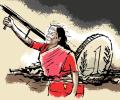
Finance Minister Nirmala Sitharaman will present the much-awaited 2022-23 Union Budget on February 1. While there has been strong recovery in some sectors, touch services like hospitality, tourism and leisure continue to suffer after two Covid-19 waves. Household savings have been hit due to increased spending on health care. Consumption has still not reached pre-pandemic levels.

'The robust tax collections give the finance minister a fair amount of headroom for an expansionary fiscal policy.'
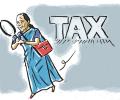
The Centre is considering a gradual phasing out of certain direct tax exemptions meant for corporate and personal tax payers. This is among the tax proposals being discussed for the upcoming Union Budget 2022-23. A top policymaker said that according to the government's internal assessment, the percentage of corporates and individuals shifting to the new exemption-less tax regime has been very encouraging, and the Budget-makers expect many more to make the switch in the coming years. The person also said the finance ministry is exploring the option of rationalising the capital gains tax rates.

These could include strengthening the public-private partnership (PPP) dispute resolution mechanism, uniform PPP institutional framework, easier terms for infrastructure companies accessing bond markets, and tax sops, Business Standard has learnt. Investment in infrastructure projects with high multiplier effect has been the Centre's main plank to revive the economy, create employment and boost consumption.
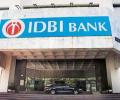
The department of investment and public asset management is racing against time to launch the LIC IPO, which could become the largest-ever listing on the Indian bourses. This would lead to some delay in the strategic divestment of IDBI Bank.

According to highly placed sources, the finance ministry is likely to extend ECLGS and other loan guarantee schemes for micro, small and medium enterprises (MSMEs), hospitality and tourism sector, and the health infrastructure beyond March 31, Business Standard has learnt. This is likely to be announced by Finance Minister Nirmala Sitharaman as part of her Budget speech on February 1.
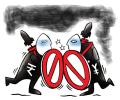
India and China have mostly set aside their bilateral differences in order to champion the cause of developing countries at the World Trade Organisation (WTO). That seems to be changing. During the latest round of China's trade policy review, India questioned its northern neighbour's claim that it was a developing country, since, going by the World Bank's definition, its per capita income belongs to that of an upper middle income country. "As per the per capita income level, the Chinese economy belongs to 'upper-middle income'. "How can China still claim to be a developing country? "What are the indicators which China is using to claim such a status?" India asked.
While presenting her 2021-22 Union Budget, Finance Minister Nirmala Sitharaman had set a fiscal deficit target of 6.8 per cent of nominal gross domestic product (GDP) against the 2020-21 Revised Estimate of 9.5 per cent. The fiscal correction in the upcoming 2022-23 Union Budget is unlikely to be that steep. Even as discussions among top Budget-makers are ongoing, the fiscal deficit target for 2022-23 may likely be in the range of 6.5-6.8 per cent.
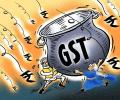
The Centre is looking to convene a meeting of the all-powerful Goods and Service Tax Council in early January. The meeting is likely to focus on rectifying the inverted duty structure for a few more items and will also serve as a platform for pre-Budget discussions between Union Finance Minister Nirmala Sitharaman and state finance ministers, Business Standard has learnt. "The current Winter Session of Parliament ends on December 23, followed by the Christmas-New Year period. "After that we would like to have a meeting of the GST Council, depending on whether there can be a quorum," a top government official said.

'The CEA suggested that could be as high as 19 per cent.'

A lot of work is needed to be done on the part of the insurance sector behemoth, and the government, before it is ready for its market debut.

Almost all infrastructure ministries continued spending on capex throughout the lockdown, even as the Centre tried to maintain some semblance of economic normalcy.

The sudden stop in economic activity led to a sharp decline in employment-intensive sectors like construction, manufacturing and trade, hotels, transport etc.

Instead, 2019-20 could be the base from which the Budget estimates for next year are calculated.

he government is examining a plan of bank recapitalisation and considering an urban version of MNREGS.

The plan could mature into either an umbrella programme for urban youths similar to the Garib Kalyan Rozgaar Abhiyaan or a modified urban-focused version of MGNREGS.
The thinking at the Centre is that since the RBI has ramped up purchases of government bonds, the interest earned on them will be transferred to the exchequer as dividend.

'We are not able to manufacture even low-end products as cheaply as China.' 'We are not buying Chinese goods today out of any love for China.'
